Skip to content

7 Common Pitfalls When Adopting Zero Trust Security

Zero Trust security is rapidly transforming the cybersecurity landscape. It moves away from traditional perimeter-based security models. In this approach, every connection attempt is continuously verified before granting resource access.

56% of global organizations say adopting Zero Trust is a “Top” or “High” priority.

This approach offers significant security advantages. But the transition process presents several potential pitfalls. Running into these can harm a company’s cybersecurity efforts.

Below, we’ll explore these common roadblocks. We’ll also offer guidance on navigating a successful Zero Trust security adoption journey.

 Remembering the Basics: What is Zero Trust Security?

Zero Trust throws out the old “castle and moat” security model. The one where everyone inside the network perimeter is trusted. Instead, it assumes everyone and everything is a potential threat. This is true even for users already inside the network. This may sound extreme, but it enforces a rigorous “verify first, access later” approach.

Here are the key pillars of Zero Trust:

  • Least Privilege: Users only get access to the specific resources they need to do their jobs, no more.
  • Continuous Verification: Authentication doesn’t happen once. It’s an ongoing process. Users and devices are constantly re-evaluated for access rights.
  • Micro-Segmentation: IT divides the network into smaller segments. This limits the damage if a breach occurs.

Common Zero Trust Adoption Mistakes

Zero Trust isn’t a magic solution you can simply buy and deploy. Here are some missteps to avoid:

Treating Zero Trust as a Product, Not a Strategy

Some vendors might make Zero Trust sound like a product they can sell you. Don’t be fooled! It is a security philosophy that requires a cultural shift within your organization.

There are many approaches and tools used in a Zero Trust strategy. These include tools like multi-factor authentication (MFA) and advanced threat detection and response.

Focus Only on Technical Controls

Technology indeed plays a crucial role in Zero Trust. But its success hinges on people and processes too. Train your employees on the new security culture and update access control policies. The human element is an important one in any cybersecurity strategy.

Overcomplicating the Process

Don’t try to tackle everything at once. This can be overwhelming, and smaller companies may give up. Start with a pilot program focusing on critical areas. Then, gradually expand your Zero Trust deployment bit by bit.

Neglect User Experience

Zero Trust shouldn’t create excessive hurdles for legitimate users. Adopting controls like MFA can backfire if employees aren’t involved. Find the right balance between security and a smooth user experience. Use change management to help ease the transition process.

Skipping the Inventory

You can’t secure what you don’t know exists. Catalog all your devices, users, and applications before deploying Zero Trust. This helps identify potential access risks. It also provides a roadmap for prioritizing your efforts.

Forgetting Legacy Systems

Don’t leave older systems unprotected during your Zero Trust transition. Integrate them into your security framework or consider secure migration plans. Forgotten legacy systems can lead to data breaches that impact your entire network.

Ignoring Third-Party Access

Third-party vendors can be a security weak point. Clearly define access controls and check their activity within your network. Set time-limited access as appropriate.

Remember, Zero Trust is a Journey

Building a robust Zero Trust environment takes time and effort. Here’s how to stay on track:

  • Set Realistic Goals: Don’t expect overnight success. Define achievable milestones and celebrate progress along the way.
  • Embrace Continuous Monitoring: Security threats are constantly evolving. Continuously watch your Zero Trust system and adjust your strategies as needed.
  • Invest in Employee Training: Empower your employees as active participants in your Zero Trust journey. Regular security awareness training is vital.

The Rewards of a Secure Future

Avoid these common mistakes and adopt a strategic approach. This will enable your business to leverage the big advantages of Zero Trust security. Here’s what you can expect:

  • Enhanced Data Protection: Zero Trust minimizes the damage from a potential breach. It does this by limiting access to sensitive data.
  • Improved User Experience: Streamlined access controls create a smoother experience for authorized users.
  • Increased Compliance: Zero Trust aligns with many industry regulations and compliance standards.

Are you ready to take the first step with Zero Trust security? Equip yourself with knowledge, plan your approach, and avoid these common pitfalls. This will enable you to transform your security posture. As well as build a more resilient business in the face of evolving cyber threats.

Schedule a Zero Trust Cybersecurity Assessment

Zero Trust is quickly becoming a security expectation around the world. Our team of cybersecurity experts can help you get started deploying it successfully. Deploying it is a continuous journey towards a more secure future. We’re happy to be your trusted guides.

Contact us today to schedule a cybersecurity assessment to get started.

Article used with permission from The Technology Press.
7 Common Pitfalls When Adopting Zero Trust Security

Don’t Risk It! Why You Shouldn’t Skip Vulnerability Assessments

Cyber threats are a perpetual reality for business owners. Hackers are constantly innovating. They devise new ways to exploit vulnerabilities in computer systems and networks.

For businesses of all sizes, a proactive approach to cybersecurity is essential. One of the most crucial elements of this approach is regular vulnerability assessments. A vulnerability assessment is a systematic process. It identifies and prioritizes weaknesses in your IT infrastructure that attackers can exploit.

Some businesses may be tempted to forego vulnerability assessments. They might think it’s too costly or inconvenient. Small business leaders may also feel it’s just for the “big companies.” But vulnerability assessments are for everyone. No matter the company size. The risks associated with skipping them can be costly.

In 2023, there were over 29,000 new IT vulnerabilities discovered. That’s the highest count reported to date.

In this article, we explore the critical role of vulnerability assessments. As well as their benefits and how they help to maintain a robust cybersecurity posture. We’ll also look at the potential consequences of neglecting them.

Why Vulnerability Assessments Matter

The internet has become a minefield for businesses. Cybercriminals are constantly on the lookout for vulnerabilities to exploit. Once they do, they typically aim for one or more of the following:

  • Gain unauthorized access to sensitive data
  • Deploy ransomware attacks
  • Disrupt critical operations

Here’s why vulnerability assessments are crucial in this ever-evolving threat landscape:

  • Unseen Weaknesses: Many vulnerabilities remain hidden within complex IT environments. Regular assessments uncover these weaknesses before attackers can exploit them.
  • Evolving Threats: Experts discover new vulnerabilities all the time. Regular assessments ensure your systems are up to date. And that they’re protected from potential security gaps.
  • Compliance Requirements: Many industries have regulations mandating regular vulnerability assessments. This helps to ensure data security and privacy compliance.
  • Proactive Approach vs. Reactive Response: Identifying vulnerabilities proactively allows for timely remediation. This significantly reduces the risk of a costly security breach. A reactive approach is where you only address security issues after an attack. This can lead to significant financial losses and disruptions to your business.

The High Cost of Skipping Vulnerability Assessments

Some business owners might think vulnerability assessments seem like an unnecessary expense. But the cost of neglecting them can be far greater. Here are some potential consequences of skipping vulnerability assessments:

  • Data Breaches

    Unidentified vulnerabilities leave your systems exposed. This makes them prime targets for cyberattacks. Just one breach can result in the theft of sensitive data and customer information.

  • Financial Losses

    Data breaches can lead to hefty fines and legal repercussions. As well as the cost of data recovery and remediation. Business disruptions caused by cyberattacks can also result in lost revenue and productivity.

    The current average cost of a data breach is $4.45 million. This represents an increase of 15% over the last three years. These costs continue to increase, making cybersecurity a necessity for ongoing business survival.

  • Reputational Damage

    A security breach can severely damage your company’s reputation. It can erode customer trust and potentially impact future business prospects. Both B2B and B2C customers hesitate to do business with a company that has experienced a breach.

  • Loss of Competitive Advantage

    Cyberattacks can cripple your ability to innovate and compete effectively. This can hinder your long-term growth aspirations. Rather than forward motion on innovation, your company is playing security catch-up.

The Benefits of Regular Vulnerability Assessments

Regular vulnerability assessments offer a multitude of benefits for your business:

  • Improved Security Posture: Vulnerability assessments identify and address vulnerabilities. This means you significantly reduce the attack surface for potential cyber threats.
  • Enhanced Compliance: Regular assessments help you stay compliant with relevant industry regulations. As well as data privacy laws your business is subject to.
  • Peace of Mind: Knowing your network is secure from vulnerabilities gives you peace of mind. It allows you to focus on core business operations.
  • Reduced Risk of Costly Breaches: Proactive vulnerability management helps prevent costly data breaches. As well as the associated financial repercussions.
  • Improved Decision-Making: Vulnerability assessments provide valuable insights into your security posture. This enables data-driven decisions about security investments and resource allocation.

The Vulnerability Assessment Process: What to Expect

A vulnerability assessment typically involves several key steps:

  1. Planning and Scoping: Define the scope of the assessment. This includes outlining what systems and applications are part of the evaluation.
  2. Discovery and Identification: Use specialized tools and techniques to scan your IT infrastructure. They will look for known vulnerabilities.
  3. Prioritization and Risk Assessment: Classify vulnerabilities based on severity and potential impact. Focus on critical vulnerabilities that need immediate remediation.
  4. Remediation and Reporting: Develop a plan to address identified vulnerabilities. This should include patching, configuration changes, and security updates. Generate a detailed report that outlines the vulnerabilities found. As well as their risk level, and remediation steps taken.

Investing in Security is Investing in Your Future

Vulnerability assessments are not a one-time fix. Your business should conduct them regularly to maintain a robust cybersecurity posture. By proactively identifying and addressing vulnerabilities, you can:

  • Significantly reduce your risk of cyberattacks
  • Protect sensitive data
  • Ensure business continuity

Remember, cybersecurity is an ongoing process. Vulnerability assessments are a vital tool in your security arsenal. Don’t gamble with your organization’s future. Invest in vulnerability assessments and safeguard your valuable assets

Contact Us Today to Schedule a Vulnerability Assessment

When was the last time your business had any vulnerability testing? No matter your size, we can help. Our vulnerability assessment will look for any weaknesses in your infrastructure. Then, we take the next steps and provide you with actionable recommendations.

Contact us today to schedule a vulnerability assessment for better security.

Article used with permission from The Technology Press.
Don’t Risk It! Why You Shouldn’t Skip Vulnerability Assessments

Here Are 5 Data Security Trends to Prepare for in 2024

With cyber threats evolving at an alarming pace, staying ahead of the curve is crucial. It’s a must for safeguarding sensitive information. Data security threats are becoming more sophisticated and prevalent. The landscape must change to keep up. In 2024, we can expect exciting developments alongside persistent challenges.

Over 70% of business professionals say their data privacy efforts are worth it. And that their business receives “significant” or “very significant” benefits from those efforts.

Staying informed about these trends is crucial. This is true whether you’re an individual or a business safeguarding valuable data.

Here are some key areas to watch.

  • 1. The Rise of the Machines: AI and Machine Learning in Security

    Artificial intelligence (AI) and machine learning (ML) are no longer futuristic concepts. They are actively shaping the cybersecurity landscape. This year, we’ll likely see a further rise in their application:

    • Enhanced Threat Detection: AI and ML algorithms excel at analyzing massive datasets. This enables them to identify patterns and anomalies that might escape human notice. This translates to a quicker detection of and reaction to potential cyber threats.
    • Predictive Analytics: AI can predict potential vulnerabilities and suggest proactive measures. It does this by analyzing past cyberattacks and security incidents.
    • Automated Response: AI can go beyond detection and analysis. Professionals can program it to automatically isolate compromised systems as well as block malicious activity and trigger incident response procedures. This saves valuable time and reduces the potential impact of attacks.

    AI and ML offer significant benefits. But it’s important to remember they are tools, not magic solutions. Deploying them effectively requires skilled professionals. Experts who can interpret the data and make informed decisions.

  • 2. Battling the Ever-Evolving Threat: Ransomware

    Ransomware is malicious software that encrypts data and demands a ransom for decryption. It has been a persistent threat for years. Unfortunately, it’s not going anywhere in 2024. Hackers are constantly refining their tactics, targeting individuals and businesses alike. Here’s what to expect:

    • More Targeted Attacks: Hackers will likely focus on meticulously selecting high-value targets. Such as critical infrastructure or businesses with sensitive data. They do this to maximize their impact and potential payout.
    • Ransomware-as-a-Service (RaaS): This enables those with limited technical expertise to rent ransomware tools. This makes it easier for a wider range of actors to launch attacks.
    • Double Extortion: Besides encrypting data, attackers might steal it beforehand. They then may threaten to leak it publicly if the ransom isn’t paid, adding pressure on victims.
  • 3. Shifting Strategies: Earlier Data Governance and Security Action

    Traditionally, companies have deployed data security measures later in the data lifecycle. For example, after data has been stored or analyzed. But a new approach towards earlier action is gaining traction in 2024. This means:

    • Embedding Security Early On:Organizations are no longer waiting until the end. Instead, they will integrate data controls and measures at the start of the data journey. This could involve setting data classification levels as well as putting in place access restrictions. They will also be defining data retention policies early in the process.
    • Cloud-Centric Security:More organizations are moving towards cloud storage and processing. As they do this, security solutions will be closely integrated with cloud platforms. This ensures consistent security throughout the entire data lifecycle.
    • Compliance Focus:Data privacy regulations like GDPR and CCPA are becoming increasingly stringent. As this happens, companies will need to focus on data governance to ensure compliance.
  • 4. Building a Fortress: Zero Trust Security and Multi-Factor Authentication

    We’re in a world where traditional perimeter defenses are constantly breached. This is why the “Zero Trust” approach is gaining prominence. This security model assumes that no user or device is inherently trustworthy. Users and programs need access verification for every interaction. Here’s how it works:

    • Continuous Verification:Every access request will be rigorously scrutinized. This is regardless of its origin (inside or outside the network). Systems base verification on factors like user identity, device, location, and requested resources.
    • Least Privilege Access:Companies grant users the lowest access level needed to perform their tasks. This minimizes the potential damage if hackers compromise their credentials

    Multi-Factor Authentication (MFA): MFA adds an important extra layer of security. It requires users to provide extra factors beyond their password.

  • 5. When Things Get Personal: Biometric Data Protection

    Biometrics include facial recognition, fingerprints, and voice patterns. They are becoming an increasingly popular form of authentication. But this also raises concerns about the potential for misuse and privacy violations:

    • Secure Storage Is Key:Companies need to store and secure biometric data. This is ideally in encrypted form to prevent unauthorized access or breaches.
    • Strict Regulation:Expect governments to install stricter regulations. These will be around the collection, use, and retention of biometric data. Organizations will need to ensure they adhere to evolving standards. They should also focus on transparency and user consent.

How to Prepare for Evolving Data Security Trends

Feeling a bit overwhelmed? Don’t worry, here are some practical steps you and your organization can take:

  • Stay Informed
  • Invest in Training
  • Review Security Policies
  • Embrace Security Technologies
  • Test Your Systems

Schedule a Data Security Assessment Today!

The data security landscape of 2024 promises to be both intriguing and challenging. We can help you navigate this evolving terrain with confidence.

A data security assessment is a great place to start. Contact us today to schedule yours.

Article used with permission from The Technology Press.
Here Are 5 Data Security Trends to Prepare for in 2024

Google & Yahoo’s New DMARC Policy Shows Why Businesses Need Email Authentication… Now

Have you been hearing more about email authentication lately? There is a reason for that. It’s the prevalence of phishing as a major security threat. Phishing continues as the main cause of data breaches and security incidents. This has been the case for many years.

A major shift in the email landscape is happening. The reason is to combat phishing scams. Email authentication is becoming a requirement for email service providers. It’s crucial to your online presence and communication to pay attention to this shift.

Google and Yahoo are two of the world’s largest email providers. They have implemented a new DMARC policy that took effect in February 2024. This policy essentially makes email authentication essential. It’s targeted at businesses sending emails through Gmail and Yahoo Mail.

But what’s DMARC, and why is it suddenly so important? Don’t worry, we’ve got you covered. Let’s dive into the world of email authentication. We’ll help you understand why it’s more critical than ever for your business.

The Email Spoofing Problem

Imagine receiving an email seemingly from your bank. It requests urgent action. You click a link, enter your details, and boom – your information is compromised.

The common name for this is email spoofing. It’s where scammers disguise their email addresses. They try to appear as legitimate individuals or organizations. Scammers spoof a business’s email address. Then they email customers and vendors pretending to be that business.

These deceptive tactics can have devastating consequences on companies. These include:

  • Financial losses
  • Reputational damage
  • Data breaches
  • Loss of future business

Unfortunately, email spoofing is a growing problem. It makes email authentication a critical defense measure.

What is Email Authentication?

Email authentication is a way of verifying that your email is legitimate. This includes verifying the server sending the email. It also includes reporting back unauthorized uses of a company domain.

Email authentication uses three key protocols, and each has a specific job:

  • SPF (Sender Policy Framework): Records the IP addresses authorized to send email for a domain.
  • DKIM (DomainKeys Identified Mail): Allows domain owners to digitally “sign” emails, verifying legitimacy.
  • DMARC (Domain-based Message Authentication, Reporting, and Conformance): Gives instructions to a receiving email server. Including, what to do with the results of an SPF and DKIM check. It also alerts domain owners that their domain is being spoofed.

SPF and DKIM are protective steps. DMARC provides information critical to security enforcement. It helps keep scammers from using your domain name in spoofing attempts.

Here’s how it works:

  1. You set up a DMARC record in your domain server settings. This record informs email receivers (like Google and Yahoo). It tells them the IP addresses authorized to send emails on your behalf.
  2. What happens next? Your sent email arrives at the receiver’s mail server. It is looking to see if the email is from an authorized sender.
  3. Based on your DMARC policy, the receiver can take action. This includes delivery, rejection, or quarantine.
  4. You get reporting back from the DMARC authentication. The reports let you know if your business email is being delivered. It also tells you if scammers are spoofing your domain.

Why Google & Yahoo’s New DMARC Policy Matters

Both Google and Yahoo have offered some level of spam filtering. But didn’t strictly enforce DMARC policies. The new DMARC policy raises the bar on email security.

  • Starting in February 2024, the new rule took place. Businesses sending over 5,000 emails daily must have DMARC implemented.  
  • Both companies also have policies for those sending fewer emails. These relate to SPF and DKIM authentication.

Look for email authentication requirements to continue. You need to pay attention to ensure the smooth delivery of your business email.

The Benefits of Implementing DMARC:

Implementing DMARC isn’t just about complying with new policies. It offers a range of benefits for your business:

  • Protects your brand reputation:DMARC helps prevent email spoofing scams. These scams could damage your brand image and customer trust.
  • Improves email deliverability:Proper authentication ensures delivery. Your legitimate emails reach recipients’ inboxes instead of spam folders.
  • Provides valuable insights:DMARC reports offer detailed information. They give visibility into how different receivers are handling your emails as well as help you identify potential issues. They also improve your email security posture.

Taking Action: How to Put DMARC in Place

Implementing DMARC is crucial now. This is especially true considering the rising email security concerns with email spoofing. Here’s how to get started:

  • Understand your DMARC options
  • Consult your IT team or IT security provider
  • Track and adjust regularly

Need Help with Email Authentication & DMARC Monitoring?

DMARC is just one piece of the email security puzzle. It’s important to put email authentication in place. This is one of many security measures required in the modern digital environment. Need help putting these protocols in place? Just let us know.

Contact us today to schedule a chat.

Article used with permission from The Technology Press.
Google & Yahoo’s New DMARC Policy Shows Why Businesses Need Email Authentication… Now

Eye-opening Insights from the 2023 Annual Cybersecurity Attitudes and Behaviors Report

We are living in an era dominated by digital connectivity. You can’t overstate the importance of cybersecurity. As technology advances, so do the threats that lurk in the online world.

Often, it’s our own actions that leave us most at risk of a cyberattack or online scam. Risky behaviors include weak passwords and lax security policies. As well as thinking “This won’t happen to me.” This is why human error is the cause of approximately 88% of data breaches.

The National Cybersecurity Alliance and CybSafe are working to correct poor cyber hygiene. Each year, the duo publishes a report on cybersecurity attitudes and behaviors.

The goal is to educate both people and businesses. To educate them on how to better secure their digital landscapes.

This year’s study surveyed over 6,000 people across the U.S., Canada, the U.K., Germany, France, and New Zealand. The survey asked about several things. These include knowledge of cybersecurity risks, security best practices, and challenges faced.

The report reveals some eye-opening insights. These include how people perceive and respond to cyber threats as well as what they can do to improve their cybersecurity posture. Here are some of the key findings from the report.

  • We Are Online… a Lot

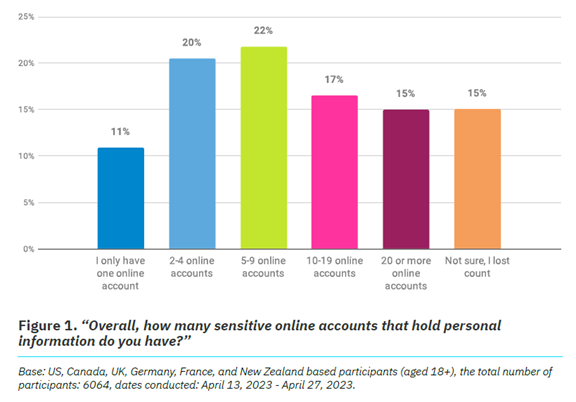
    It’s no surprise that 93% of the study participants are online daily. The logins we create continue to expand, as well as those considered “sensitive.” Sensitive accounts hold personal information that could be harmful if stolen.

    Nearly half (47%) of the study’s respondents have ten or more sensitive online accounts. This amplifies risk. Especially if people are using the same password for two or more of those accounts.

  • Online Security Makes People Frustrated

    Most people (84%) feel that online security is a priority. But as many as 39% feel frustrated, and nearly the same amount intimidated. It can seem that you just can’t get ahead of the hackers. Just over half of people thought digital security was under their control. That leaves a whole lot that don’t think so.

    But that is no reason to let down your defenses and become an easy target. There are best practices you can put in place to safeguard your online accounts that work.

    These include:

    • Enabling multi-factor authentication on your accounts
    • Using an email spam filter to catch phishing emails
    • Adding a DNS filter to block malicious websites
    • Using strong password best practices
  • People Need More Access to Cybersecurity Training

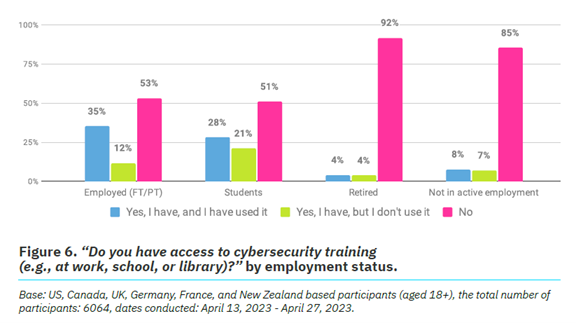
    One way to reduce human errors associated with cybersecurity is to train people. The survey found that just 26% of respondents had access to cybersecurity training. 

    It also broke this down by employment status. We see that those not actively employed are most lacking. Even those employed can use more training access and encouragement. Just 53% report having access to cybersecurity awareness training and using it.

  • Source: The Annual Cybersecurity Attitudes and Behaviors Report 2023

  • Employers can significantly reduce their risk of falling victim to a data breach. They can do this by beefing up their security awareness training. There is also a large opportunity to provide more training. Particularly to those retired or not actively employed.

  • Cybercrime Reporting Is Increasing

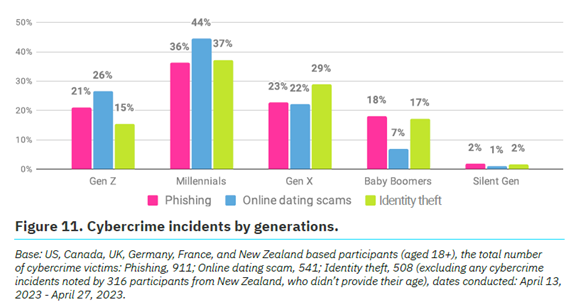
    Over a quarter (27%) of survey participants said they had been a victim of cybercrime.

    The types of cybercrimes reported include:

    • Phishing (47%)
    • Online dating scams (27%)
    • Identity theft (26%)

    Which generation reported the most cybercrime incidents? Millennials. In fact, Baby Boomers and the Silent Generation reported the fewest.

  • Source: The Annual Cybersecurity Attitudes and Behaviors Report 2023

    No matter where you fall in the generations, it’s important to adopt security best practices. We’ll go through some of these next.

Online Security Best Practices to Reduce Your Risk

1.Strong, Unique Passwords:

  • Start with the basics. Create strong, unique passwords for each online account.
  • Use a combination of uppercase and lowercase letters, numbers, and special characters

2.Multi-Factor Authentication (MFA):

  • Enhance your account security with multi-factor authentication.
  • MFA adds an extra barrier to unauthorized access. Even for compromised passwords.

3. Regular Software Updates:

  • Keep all your software, including operating systems and mobile apps, up to date.

4. Beware of Phishing Attacks:

  • Exercise caution when clicking on links or opening attachments. Especially in emails from unknown sources.
  • Verify the legitimacy of emails and websites. Check for subtle signs, such as misspelled URLs or unfamiliar sender addresses.

5. Use Secure Wi-Fi Networks:

  • Ensure you connect to a secure and password-protected Wi-Fi network.
  • Avoid using public Wi-Fi for sensitive transactions. Unless using a virtual private network (VPN).

6. Data Backup:

  • Regularly back up important data to an external device or a secure cloud service.

7. Use Antivirus and Anti-Malware Software:

  • Install reputable antivirus and anti-malware software on all devices.
  • Regularly scan your systems for potential threats.

8. Be Mindful of Social Media Settings:

  • Review and adjust your privacy settings on social media platforms.
  • Limit the amount of personal information visible to the public.

9. Secure Your Personal Devices:

  • Lock your devices with strong passwords or biometric authentication.

10. Educate and Stay Informed:

  • Educate yourself and your team through cybersecurity awareness programs. This fosters a culture of vigilance and preparedness.

Schedule Cybersecurity Awareness Training Today

A little education on cybersecurity goes a long way toward protecting your data. Our experts can provide security training at the level you need. We’ll help you fortify your defenses against phishing, scams, and cyberattacks.

Contact us today to schedule a cybersecurity assessment.

Article used with permission from The Technology Press.
Eye-opening Insights from the 2023 Annual Cybersecurity Attitudes and Behaviors Report

5 Cybersecurity Predictions for 2024 You Should Plan For

Cybersecurity is a constantly evolving field. There are new threats, technologies, and opportunities emerging every year. As we enter 2024, organizations need to be aware of current and future cyber threats. Businesses of all sizes and sectors should plan accordingly.

Staying ahead of the curve is paramount to safeguarding digital assets. Significant changes are coming to the cybersecurity landscape. Driving these changes are emerging technologies and evolving threats. As well as shifting global dynamics.

Next, we’ll explore key cybersecurity predictions for 2024 that you should consider.

1. AI Will Be a Double-edged Sword

Artificial intelligence (AI) has been a game-changer for cybersecurity. It has enabled faster and more accurate threat detection, response, and prevention. But AI also poses new risks such as adversarial AI, exploited vulnerabilities, and misinformation.

For example, malicious actors use chatbots and other large language models to generate:

  • Convincing phishing emails
  • Fake news articles
  • Deepfake videos

This malicious content can deceive or manipulate users. Organizations will need to put in place robust security protocols. This includes embracing a human-in-the-loop approach as well as regularly tracking and reviewing their AI systems. These steps will help them mitigate these risks and harness the power of AI for a more secure future.

2. Quantum Computing Will Become a Looming Threat

Quantum computing is still a few years away from reaching its full potential. But it is already a serious threat to the security of current encryption standards.

Quantum computers can potentially break asymmetric encryption algorithms. These algorithms are widely used to protect data in transit and at rest. This means that quantum-enabled hackers could compromise sensitive data, like financial transactions.

Organizations will need to start preparing for this scenario. They can do this by assessing their potential risks first. Then, adopting quantum-resistant technologies and deploying quantum-safe architectures.

3. Hacktivism Will Rise in Prominence

Hacktivism is the use of hacking techniques to promote a political or social cause. Such as exposing corruption, protesting injustice, or supporting a movement.

Hacktivism has been around for decades. But it’s expected to increase in 2024. Particularly during major global events. These may include the Paris Olympics and the U.S. Presidential Election as well as specific geopolitical conflicts.

Hacktivists may target organizations that they perceive as adversaries or opponents. This can include governments, corporations, or media outlets. These attacks can disrupt their operations as well as leak their data or deface their websites.

Organizations will need to be vigilant against potential hacktivist attacks. This includes being proactive in defending their networks, systems, and reputation.

4. Ransomware Will Remain a Persistent Threat

Ransomware is a type of malware that encrypts the victim’s data. The attacker then demands a ransom for its decryption. Ransomware has been one of the most damaging types of cyberattacks in recent years.

In 2023, ransomware attacks increased by more than 95% over the prior year.

Ransomware attacks are likely to continue increasing in 2024. Due to new variants, tactics, and targets emerging. For example, ransomware attackers may leverage AI to enhance their encryption algorithms.  As well as evade detection and customize their ransom demands.

Hackers may also target cloud services, IoT devices, or industrial control systems. This could cause more disruption and damage. Organizations will need to put in place comprehensive ransomware prevention and response strategies. Including:

  • Backing up their data regularly
  • Patching their systems promptly
  • Using reliable email and DNS filtering solutions
  • Educating their users on how to avoid phishing emails

5. Cyber Insurance Will Become More Influential

Cyber insurance covers the losses and liabilities resulting from cyberattacks. It has become more popular and important in recent years. This is due to cyberattacks becoming more frequent and costly.

Cyber insurance can help organizations recover from cyber incidents faster and more effectively. It provides financial compensation, legal help, or technical support.

But cyber insurance can also influence the security practices of organizations. More cyber insurers may impose certain requirements or standards on their customers such as implementing specific security controls or frameworks. Organizations will need to balance the benefits and costs of cyber insurance as well as ensure that they are in compliance with their cyber insurers’ expectations.

<H2>Be Proactive About Cybersecurity – Schedule an Assessment</H2>

It’s clear that the cybersecurity landscape will continue to evolve rapidly. Organizations and individuals must proactively prepare for emerging threats. This includes adopting advanced technologies and prioritizing workforce development as well as staying abreast of regulatory changes.

Put a comprehensive cybersecurity strategy in place. One that encompasses these predictions. This will help you navigate the digital frontier with resilience and vigilance.

Need help ensuring a secure and trustworthy digital environment for years to come? Contact us today to schedule a cybersecurity assessment.

Article used with permission from The Technology Press.
5 Cybersecurity Predictions for 2024 You Should Plan For

Online Security: Addressing the Dangers of Browser Extensions

Browser extensions have become as common as mobile apps. People tend to download many and use few. There are over 176,000 browser extensions available on Google Chrome alone. These extensions offer users extra functionalities and customization options.

While browser extensions enhance the browsing experience, they also pose a danger. Which can mean significant risks to online security and privacy.

In this article, we unravel the dangers associated with browser extensions. We’ll shed light on the potential threats they pose. As well as provide insights into safeguarding your online presence.

The Allure and Perils of Browser Extensions

Browser extensions are often hailed for their convenience and versatility. They are modules that users can add to their web browsers. They extend functionality and add customizable elements.

From ad blockers and password managers to productivity tools, the variety is vast. But the ease with which users can install these extensions is a weakness. Because it also introduces inherent security risks.

Next, we’ll delve into the hazards associated with browser extensions. It is imperative to strike a balance between the benefits and dangers.

Key Risks Posed by Browser Extensions

Privacy Intrusions

Many browser extensions request broad permissions. If abused, they can compromise user privacy. Some of these include accessing browsing history and monitoring keystrokes. Certain extensions may overstep their intended functionality. This can lead to the unauthorized collection of sensitive information.

Users often grant permissions without thoroughly reviewing them. This causes them to unintentionally expose personal data to potential misuse.

Malicious Intent

There are many extensions developed with genuine intentions. But some extensions harbor malicious code. This code can exploit users for financial gain or other malicious purposes. These rogue extensions may inject unwanted ads. As well as track user activities or even deliver malware.

These extensions often use deceptive practices. They make it challenging for users to distinguish between legitimate and malicious software.

Outdated or Abandoned Extensions

Extensions that are no longer maintained or updated pose a significant security risk. Outdated extensions may have unresolved vulnerabilities. Hackers can exploit them to gain access to a user’s browser. As well as potentially compromising their entire system. Without regular updates and security patches, these extensions become a liability.

Phishing and Social Engineering

Some malicious extensions engage in phishing attacks. As well as social engineering tactics. These attacks can trick users into divulging sensitive information.

This can include creating fake login pages or mimicking popular websites. These tactics lead unsuspecting users to unknowingly provide data. Sensitive data, like usernames, passwords, or other confidential details.

Browser Performance Impact

Certain extensions can significantly impact browser performance. This can happen due to being poorly coded or laden with unnecessary features. This results in a subpar user experience. It can also lead to system slowdowns, crashes, or freezing. An extension’s perceived benefits may attract users. But they end up unwittingly sacrificing performance.

Mitigating the Risks: Best Practices for Browser Extension Security

1. Stick to Official Marketplaces

Download extensions only from official browser marketplaces. Such as those connected with the browser developer (Google, Microsoft, etc.). These platforms have stringent security measures in place. This reduces the likelihood of encountering malicious software.

2. Review Permissions Carefully

Before installing any extension, carefully review the permissions it requests. Be cautious if an extension seeks access to unusual data. Such as data that seems unrelated to its core functionality. Limit permissions to only what is essential for the extension’s intended purpose.

3. Keep Extensions Updated

Regularly update your browser extensions. This ensures you have the latest security patches. Developers release updates to address vulnerabilities and enhance security. If an extension is no longer receiving updates, consider finding an alternative.

4. Limit the Number of Extensions

It’s tempting to install several extensions for various functionalities. But each added extension increases the potential attack surface. Only install extensions that are genuinely needed. Regularly review and uninstall those that are no longer in use.

5. Use Security Software

Use reputable antivirus and anti-malware software. This adds an extra layer of protection against malicious extensions. These tools can detect and remove threats that may bypass browser security.

6. Educate Yourself

Stay informed about the potential risks associated with browser extensions. Understand the permissions you grant. Be aware of the types of threats that can arise from malicious software. Education is a powerful tool in mitigating security risks.

7. Report Suspicious Extensions

If you encounter a suspicious extension, report it. You should report it to the official browser extension marketplace and your IT team. This proactive step helps browser developers take prompt action. That action protects users from potential threats.

8. Regularly Audit Your Extensions

Conduct regular audits of the extensions installed on your browser. Remove any that are unnecessary or pose potential security risks. Maintain a lean and secure browsing environment. This is a key aspect of online security.

Contact Us for Help with Online Cybersecurity

Browser extensions are just one way you or your employees can put a network at risk. Online security is multi-layered. It includes protections from phishing, endpoint threats, and more.

Don’t stay in the dark about your defenses. We can assess your cybersecurity measures and provide proactive steps for better protection.

Give us a call today to schedule a chat.

Article used with permission from The Technology Press.
Online Security: Addressing the Dangers of Browser Extensions

Examples of How a Data Breach Can Cost Your Business for Years

  • In the digital age, data is the lifeblood of businesses. It fuels operations, decision-making, and customer interactions. But there is a dark underbelly of this data-centric landscape. It’s the persistent threat of data breaches.

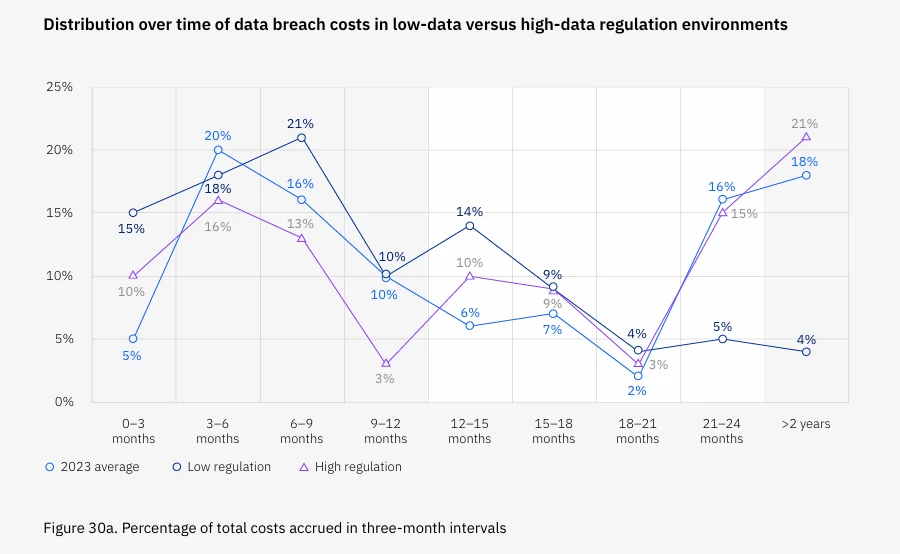
    The repercussions of a data breach extend far beyond the immediate aftermath. They often haunt businesses for years. Only 51% of data breach costs occur within the first year of an incident. The other 49% happen in year two and beyond.

  • Image source: IBM’s Cost of a Data Breach Report 2023

    We’ll take a look at the long-term consequences of a data breach. As well as examine a real-world example. You’ll see how a single breach can have enduring implications. Ones that impact a business’s reputation, finances, and regulatory standing.

The Unseen Costs of a Data Breach

Introduction to the First American Title Insurance Co. Case

The 2019 cybersecurity breach at First American serves as a stark illustration. It reminds us of the far-reaching consequences of a data breach. In this case, the New York Department of Financial Services (NYDFS) imposed a $1 million fine. Cybersecurity sites announced the fine in the fall of 2023. The company’s fine was for failing to safeguard sensitive consumer information.

The breach exposed over 880 million documents. These files contained personal and financial data. The breach represented a significant violation of data protection standards.

This is one example of how costs can come long after an initial breach. Here are some other ways security incidents can haunt businesses for years.

Lingering Impacts of a Data Breach

Financial Repercussions

The financial toll of a data breach is significant. Immediate costs include things like:

  • Breach detection
  • Containment
  • Customer notification

Beyond those, businesses face long-term expenses. These relate to legal battles, regulatory fines, and reparations. Regulatory penalties are just one facet of the financial repercussions. Others include potential legal actions from affected individuals. As well as class-action lawsuits adding to the monetary strain.

Reputation Damage

The impact on a business’s reputation is arguably the most enduring consequence. Customers lose trust in a company’s ability to protect their sensitive information. This loss of trust can result in a decline in customer retention. As well as acquisition difficulties and long-lasting damage to the brand image.

Rebuilding a tarnished reputation takes time. It also takes concerted efforts. These may involve public relations campaigns and enhanced security measures. These actions help assure stakeholders of renewed commitment to data protection.

Regulatory Scrutiny

Regulatory bodies increasingly hold businesses accountable for safeguarding consumer data. A data breach triggers regulatory scrutiny. This may lead to fines and ongoing compliance requirements.

Regulatory authorities take a stringent stance on data security. As well as on companies that fail to meet cybersecurity standards. The fallout includes financial penalties. As well as increased oversight and mandatory security improvements.

Operational Disruption

The aftermath of a data breach disrupts normal business operations. Companies must take remediation efforts and put in place enhanced security measures. These can divert resources away from core business functions.

The company feels the impact across departments, affecting productivity and efficiency. The ripple effect of operational disruption can extend for years. This impedes growth and hinders the organization’s ability to adapt to market changes.

Customer Churn and Acquisition Challenges

A data breach often leads to customer churn. Individuals lose confidence in the business’s ability to protect their data. Acquiring new customers becomes challenging. Potential clients are wary of associating with a brand that has suffered a breach. The prolonged effects on customer acquisition can hinder the company’s growth. As well as its market competitiveness.

A Cautionary Tale for Businesses Everywhere

The repercussions of a data breach extend far beyond the immediate incident. They can impact the financial health and reputation of a business for years. As well as its regulatory standing.

The frequency and sophistication of cyber threats continue to rise. Proactive cybersecurity measures are not just a necessity. They are a strategic imperative for safeguarding the long-term success of businesses.

The true cost of a data breach is not always immediately evident. It’s a complex interplay of things like:

  • Financial penalties
  • Reputation damage
  • Regulatory consequences
  • Operational disruption

These impacts can persist for years. It’s important to learn from real-world examples. As well as focusing on robust cybersecurity measures. This helps businesses mitigate the risks associated with data breaches. As well as safeguarding their immediate interests and their long-term viability.

Need a Cybersecurity Assessment to Prevent an Unexpected Breach?

There are many ways that hackers can breach a network. From endpoints to cloud tools, you must run a tight security ship. Need some help?

Schedule a cybersecurity assessment today. This is the first positive step into understanding and addressing your risk. As well as avoiding the consequences of a data breach.

Give us a call today to schedule a chat.

Article used with permission from The Technology Press.

Examples of How a Data Breach Can Cost Your Business for Years

These 7 AI Trends Are Sweeping the Cybersecurity Realm

Relentless digital innovation has defined the last few years. The symbiotic relationship between AI and cybersecurity has become pivotal. Especially when it comes to safeguarding sensitive information and digital assets.

As cyber threats evolve in complexity, AI has emerged as a formidable ally. It empowers organizations with advanced tools and techniques. Helping them to stay one step ahead of malicious actors.

In this exploration, we delve into cutting-edge AI trends. The trends that are reshaping the cybersecurity realm. As well as fortifying defenses against an ever-expanding array of cyber threats.

<H2> The Rise of AI in Cybersecurity</H2>

As cyber threats grow in sophistication, traditional measures face challenges in keeping pace. This is where AI steps in. It offers a dynamic and adaptive approach to cybersecurity.

Machine learning algorithms, neural networks, and other AI technologies analyze vast datasets. They do this at unprecedented speeds. They identify patterns and anomalies that might elude human detection.

58% of security professionals expect a completely new set of cyber risks in the coming years.

The integration of AI in cybersecurity doesn’t replace human expertise. It enhances it. This allows security professionals to focus on strategic decision-making. All while AI handles the heavy lifting of data analysis and threat detection.

AI Trends Sweeping the Cybersecurity Realm

1. Predictive Threat Intelligence

AI is revolutionizing threat intelligence by enabling predictive capabilities. Machine learning algorithms analyze historical data, current threats, and emerging patterns. It does this to predict potential future cyber threats. This proactive approach allows organizations to put in place preemptive measures. As well as close vulnerabilities before hackers exploit them

2. Behavioral Analytics

Traditional signature-based approaches struggle to keep up with zero-day attacks. As well as advanced “smart phishing.” But AI-driven behavioral analytics take a different approach. They focus on understanding the normal behavior of systems and users. Deviations from these patterns trigger alerts. This helps in identifying potential threats. Identification is based on anomalous activities rather than known signatures.

3. Autonomous Security Systems

The concept of autonomous security systems, empowered by AI, is gaining prominence. These systems can automatically detect, analyze, and respond to cyber threats in real-time. This minimizes response times and reduces the impact of security incidents. The ability to automate routine security tasks enhances efficiency. It also allows human experts to focus on strategic aspects of cybersecurity.  

4. Explainable AI (XAI)

AI plays an increasingly critical role in cybersecurity decision-making. This makes the need for transparency paramount. Explainable AI (XAI) addresses this concern. It provides insights into how AI algorithms reach specific conclusions. This enhances trust in AI-driven cybersecurity. It also helps security professionals understand the decisions made by AI systems.

5. Cloud Security Augmentation

With the proliferation of cloud services, securing cloud environments has become a priority. AI is being leveraged to enhance cloud security. A few ways that it does this is by:

  • Monitoring activities
  • Detecting anomalies
  • Responding to threats in cloud-based infrastructures

The dynamic nature of cloud environments requires adaptive security measures. This makes AI a natural fit for bolstering cloud security.

6. Deception Technology

Deception technology involves creating decoy assets within an organization’s network to mislead attackers. Companies are now integrating AI into deception technology to make decoys more convincing as well as more responsive to attackers’ behavior. This helps in early threat detection. It also provides valuable insights into attacker tactics and techniques.

7. Zero Trust Architecture

Zero Trust Architecture, supported by AI, challenges the traditional security model. Where systems trust entities inside and distrust entities outside the network. AI-driven continuous authentication and monitoring ensure that trust is never assumed. It dynamically adapts access privileges. It does this based on real-time assessments of user behavior and risk factors.

Embracing the Future of Cybersecurity with AI

As the threat landscape evolves, the incorporation of AI in cybersecurity is important. It’s not just a strategic choice, it’s a necessity. These AI trends mark a paradigm shift. They are enabling organizations to build more resilient and adaptive cybersecurity frameworks.

It’s important to stay informed and embrace the transformative power of AI. This helps businesses navigate the complexities of the digital landscape. And do it with confidence, fortifying defenses against emerging threats.

AI stands as a beacon of innovation. It continually pushes the boundaries of what’s possible in the realm of cybersecurity. The symbiotic relationship between human expertise and AI-driven capabilities is vital. It will shape the future of data security. Helping ensure a safer digital landscape for businesses and individuals alike.

Schedule a Cybersecurity Upgrade Assessment

How strong are your digital defenses against sophisticated threats? The bad guys are also using AI. This means more dangerous phishing and network attacks. Need some help assessing your strength?

Sign up for a cybersecurity assessment and shed light on your capabilities. We can help you incorporate AI-based protection and fortify your network from attacks.

Give us a call today to schedule a chat.

Article used with permission from The Technology Press.

These 7 AI Trends Are Sweeping the Cybersecurity Realm

Gamers Beware! Hackers are Targeting You.

Gamers haven’t really been the focus of cybersecurity for a long time. You mostly hear about attacks on businesses. Or stolen personal data due to phishing attacks. But gamers are not safe from hackers targeting them.

As cyberattacks continue to escalate, gamers have become prime hacking targets. Malicious actors seek to exploit vulnerabilities in the digital realm. The gaming industry continues to expand. Also, more users immerse themselves in virtual worlds. As this happens, the risks associated with cyberattacks on gamers are on the rise.

Cyberattacks on young gamers increased by 57% in 2022.

Younger gamers playing games like Minecraft, Roblox, and Fortnite are particularly at risk. They’re also often playing on their parents’ devices. Data that holds the interest of hackers fills these devices.

Next, we’ll delve into the reasons behind the increasing threat landscape. As well as discuss ways for gamers to safeguard themselves against potential threats.

The Gaming Boom and Cybersecurity Concerns

The exponential growth of the gaming industry has brought entertainment to millions. But it has also attracted the attention of cybercriminals looking for lucrative opportunities.

According to an MSN article, cyberattacks on gaming platforms are becoming more prevalent. Hackers are deploying sophisticated techniques to compromise user accounts. As well as stealing sensitive information and disrupting online gaming experiences.

Stolen Credentials and In-Game Items

What’s one of the primary motivations behind these cyberattacks? It’s the prospect of acquiring valuable in-game items. As well as the account’s credentials. Virtual goods, such as rare skins, weapons, or characters, hold real-world value. Hackers exploit weak passwords and security loopholes. This allows them to gain unauthorized access to user accounts. Once they do, they pilfer these coveted items for illicit gains.

Ransom Attacks on Gaming Accounts

Ransom attacks have become increasingly prevalent in the gaming world. In these instances, cybercriminals gain control of a user’s account. They then demand a ransom for its release. Hackers often demand the ransom in untraceable cryptocurrency. Gamers may follow the hacker’s demands. As they do not want to lose a meticulously curated game profile. As well as their progress and achievements.

Disruption of Online Gaming Services

Beyond individual attacks, hackers are now targeting gaming platforms. Their intent is to disrupt online services. They launch DDoS (Distributed Denial of Service) attacks to overwhelm servers. This renders them inaccessible to legitimate users.

This frustrates gamers. But can also have severe financial repercussions for gaming companies. They must grapple with the costs of mitigating these attacks. As well as the potential revenue losses.

Understanding the Motivations of Cybercriminals

Effectively combating the rising tide of cyber threats in gaming takes knowledge. It’s crucial to understand the motivations driving these attacks. Virtual economies within games have created a lucrative market for cybercriminals. Additionally, the anonymity of the gaming community makes gamers attractive targets.

Safeguarding Your Gaming Experience: Tips for Gamers

The cyberattack risks are escalating. Gamers must take proactive steps to protect themselves from potential cyber threats. Parents also need to watch out for younger gamers.

Here are some essential tips to enhance gaming cybersecurity.

Strengthen Your Passwords

What’s one of the simplest yet most effective ways to secure your gaming accounts? It is using strong, unique passwords. Avoid using easily guessable passwords. Incorporate a mix of letters, numbers, and special characters. Regularly updating your passwords adds an extra layer of security.

Enable Multi-factor Authentication (MFA)

Multi-factor Authentication is a powerful tool that adds significantly to security.  MFA users verify their identity through a secondary method. Such as a code sent to their mobile device. Enabling 2FA greatly reduces the risk of unauthorized access. Even if a hacker has compromised your password.

Stay Informed and Vigilant

Be aware of the latest cybersecurity threats targeting the gaming community. Stay informed about potential risks. As well as new hacking techniques and security best practices. Additionally, be vigilant when clicking on links or downloading files. Keep your guard up when interacting with unknown users within gaming platforms.

Keep Software and Antivirus Programs Updated

Regularly update your gaming platform, antivirus software, and operating system. This will patch vulnerabilities and protect against known exploits. Cybersecurity is an ongoing process. Staying up to date is crucial in thwarting potential attacks.

Use a Virtual Private Network (VPN)

Consider using a Virtual Private Network (VPN) to encrypt your internet connection. This enhances your privacy. It also adds an extra layer of protection against potential DDoS attacks. As well as other malicious activities.

Need Help with Home Cybersecurity?

The gaming landscape continues to flourish. This emphasizes the need for heightened cybersecurity awareness. Many types of home devices need protection. We can help.

Don’t leave your personal or business data at risk. We can help you with affordable options for home cybersecurity. Give us a call today to schedule a chat.

Article used with permission from The Technology Press.
Gamers Beware! Hackers are Targeting You.